When we talk about innovation in mobility, we often picture flying taxis, driverless cars, or futuristic public transport. But sometimes, the real revolution happens in places we rarely think about — like parking lots.
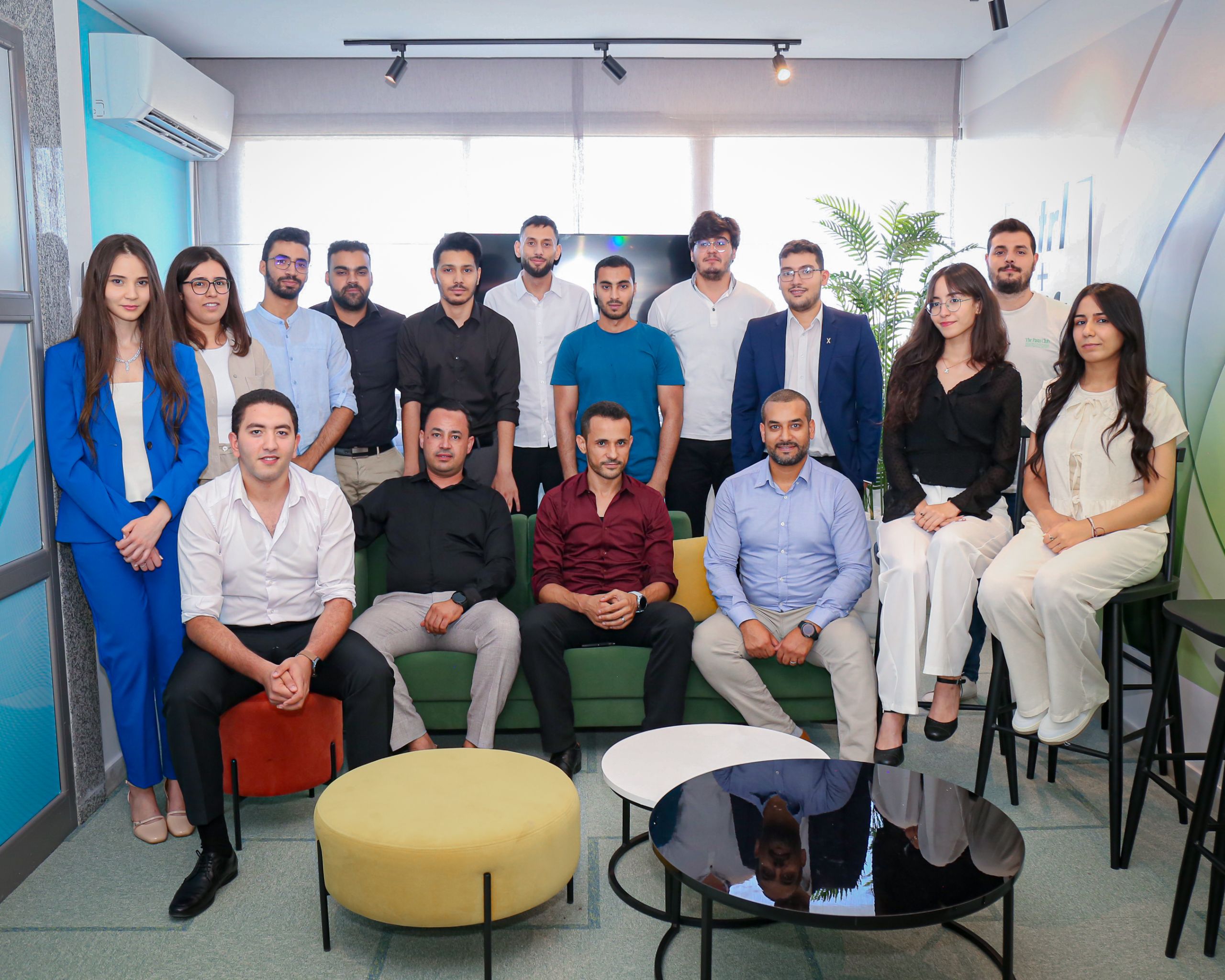
That’s the playground of Asteroidea, a Tunisian startup transforming parking areas into connected, data-driven mobility hubs. Selected among the five startups of the Terna Innovation Zone Tunisia (TIZ) — an open innovation program launched by Terna, in collaboration with Mind the Bridge and ELIS Innovation Hub — Asteroidea is rethinking how parking systems can accelerate the shift to sustainable mobility.
We sat down with Rami Hedfi and Ghassen Chattouna, co-founders of Asteroidea, to talk about the company’s journey, the challenges of urban congestion, and why they believe the future of electric mobility starts where the road ends: the parking lot.
Let’s start from the beginning. How did Asteroidea come to life?
Rami Hedfi:
Asteroidea was officially founded in 2021 by three of us — myself, Ghassen, and our CTO, Ziad. We had been working together for about 15 years in a German company, where each of us built expertise in different areas: I came from product and project management, Ghassen from sales and marketing, and Ziad from DevOps and engineering. We knew how to complement each other.
We noticed a huge gap between what big international parking system suppliers were delivering and what clients really needed. That gap became our opportunity. We started by developing digital solutions to bridge it — and that’s how Asteroidea was born.
So it all started from parking, but your vision seems much wider.
Ghassen Chattouna:
Exactly. We don’t see parking as a static industry. For us, parking is the foundation of urban mobility — a platform where cars, people, and infrastructure meet. What we’re building isn’t just another management system, but a digital ecosystem for mobility operators.
Can you explain what Asteroidea actually offers — in simple words?
Ghassen:
We develop a suite of digital products for parking and mobility operators. Think of it as a toolbox that helps them digitize and manage their operations: ticketless entry, digital payments, subscription management, and even mobile apps for staff and drivers.
A good example is our work in Kuwait City, where our team delivered digital services for nearly 50 car parks — one of the largest projects in the region. Drivers can enter using their license plate, pay automatically, and reserve parking through an app. Even the parking staff use our mobile system to monitor everything in real time.
So yes, it’s B2B, but it’s also B2B2C, because what we do ultimately improves the experience for end users.
Your flagship product is “Park and Charge.” What’s new about it?
Rami:
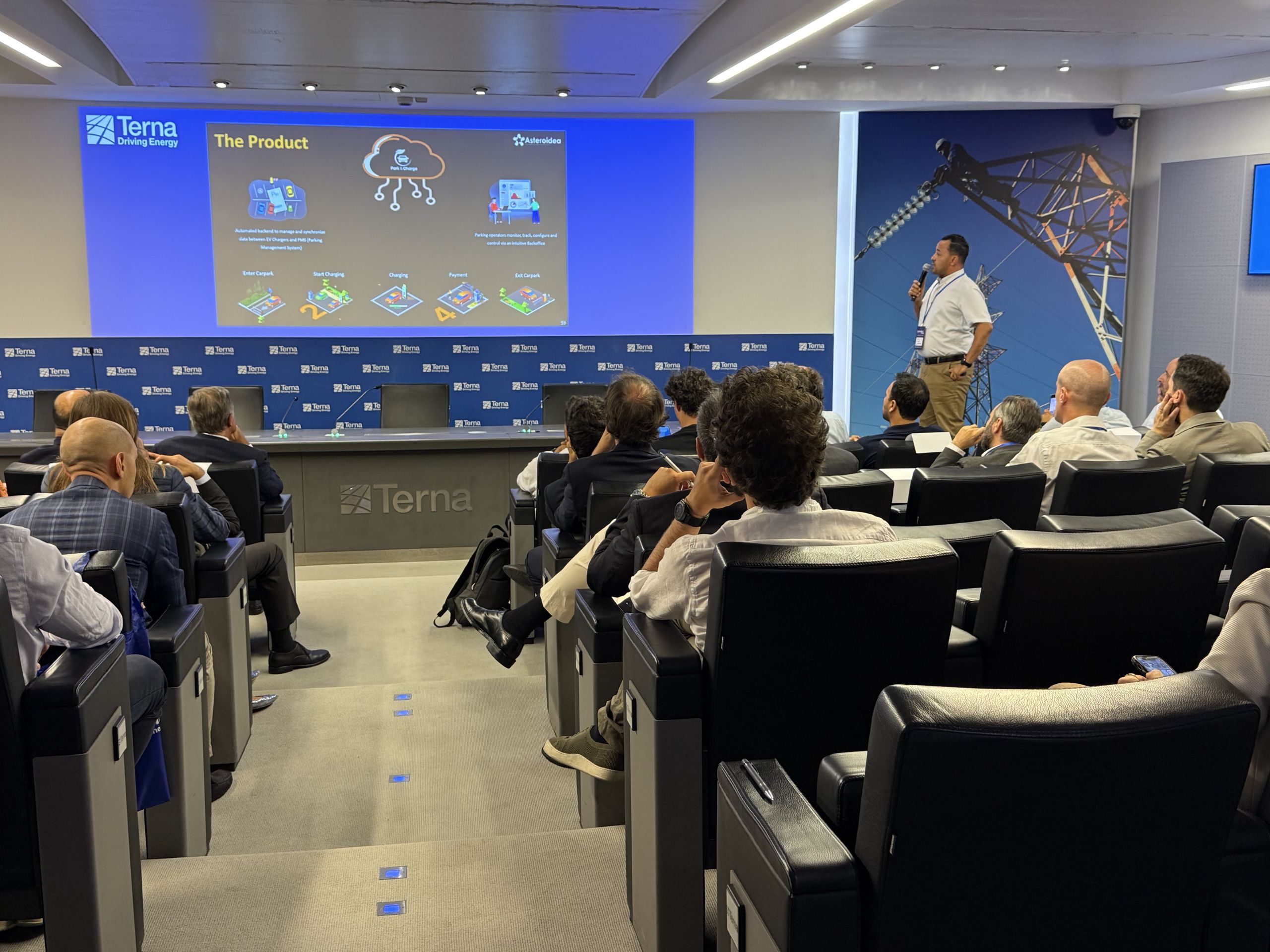
Park and Charge is our answer to one of the biggest bottlenecks in electric mobility — where to charge EVs. Many parking operators see EV charging as a separate world. We integrate it seamlessly into the parking system.
Our solution allows them to generate revenue from electricity sales while maintaining their parking operations. Everything — from billing to access control — happens in one interface.
We’re already live at Rome’s Fiumicino and Ciampino airports, with over 145 chargers connected and more than 10,000 charging sessions completed.
And if a fuel car tries to block an EV spot? The system detects it and automatically raises the parking fee. That’s our way to prevent “ICEing” — internal combustion cars taking EV spaces.
That’s a bold feature. Are you trying to replace traditional parking suppliers?
Ghassen:
Not replace — integrate. We’re hardware and system agnostic. That’s our edge. Most EV charging systems are standalone; users have to deal with two separate experiences: one for parking, one for charging. Ours combines them.
Traditional suppliers are locked into their own hardware. We, on the other hand, can integrate with anyone’s infrastructure — which makes us faster to deploy and far more scalable.
Do you sell it as your own brand or in white label?
Rami:
Both models exist. For large operators like Rome Airport, we provide a backend system only. Drivers don’t see our logo; they just experience a smoother journey. We call it the “stupid simple” approach — we want to make charging effortless. No new apps, no extra steps. You drive in, plug your car, and go. The system does the rest in the background.
How do you address the environmental and ESG side of mobility?
Ghassen:
Park and Charge is perfectly aligned with the EU’s Net Zero 2030 mission and the Alternative Fuel Infrastructure Regulation coming into force in 2025.
That regulation obliges buildings to have at least one EV charger for every ten parking spaces. For parking operators, it’s a headache — they don’t know where to start. We make compliance easy by providing a plug-in digital layer that manages it all and even makes it profitable.
So, we’re not just talking sustainability — we’re making it operational.
Urban mobility isn’t only about cars. Do you also cover micromobility?
Rami:
Absolutely. We think of car parks as mobility hubs, not just vehicle warehouses. Our platform can integrate scooters, bikes, delivery vehicles — any mode of transport that needs parking or charging.
Imagine parking your car and finding an e-scooter waiting for you to cover the last 200 meters. That’s the last-mile connection we want to enable.
And when it comes to public administrations — aren’t they usually slow to innovate?
Ghassen:
Not always! We’ve been surprised, honestly. Working with EIT Urban Mobility, we found that many European cities are actually quite open to digital transformation.
We even won the EIT Urban Mobility Excellence Award, ranking first in our cohort. That shows that public administrations are not always “old school.” Many are now looking for practical, seamless solutions — and that’s what we offer.
We’ve already tested models like Park & Ride, integrating public transport ticketing into parking systems, so users can park outside the city and pay less when they use metro or bus services.
Some might argue technology doesn’t solve congestion — it just makes it more efficient.
Rami:
True, but efficiency matters. You can’t fix congestion by ignoring technology. You need smarter systems that motivate people to behave differently.
Sometimes the issue isn’t infrastructure — it’s user engagement. That’s why we’re exploring gamification and reward systems to encourage people to use sustainable mobility options.
And again, we don’t believe every innovation needs a new app. Sometimes the smartest innovation is the one you don’t see.
Finally — your experience in the Terna Innovation Zone Tunisia program?
Ghassen:
It’s been eye-opening. Working with Mind the Bridge, Terna, and Elis gave us exposure to a new ecosystem — and a chance to understand how major European utilities think about mobility and infrastructure.
It’s a great validation for a Tunisian startup like ours that we can play a role in shaping the future of sustainable mobility — from the Mediterranean, to Europe, and beyond.
From parking lots in Rome to digital hubs in Kuwait, Asteroidea is proving that smart mobility starts from the ground up — literally. In a world racing toward electrification, their mission is simple yet ambitious: make parking part of the climate solution, not the problem.